
You know that we produce a variety of plastic caps and plugs through injection moulding. But what is injection moulding? How does this process work? These are some key stages of the injection moulding process.
Stage 1 – Materials
First, we need to pick the right material for the part! We use different materials such as LDPE, HDPE, Polypropylene, Polystyrene and ABS. We make most of our products from LDPE.
The engineer mixes material with our own waste material from previous runs before the machine melts it down. Sometimes, we mix raw material with about 10%-20% waste material. This process keeps wastage of material to a bare minimum, helping us minimise our impact on the environment. To read more about the measures we take to reduce waste click here.
Stage 2 – Selecting the Machine and Mould
We also need to select the right mould to make the part. A metal mould is split into two halves. When the machine clamps together the two halves under high pressure, it then injects the molten plastic into the metal mould, so that the plastic is moulded into the correct shape. There is a different mould for every single part we make, and every different size of mould needs a different material shot weight. Our machines range from 50 tons to 380 tons in pressure!
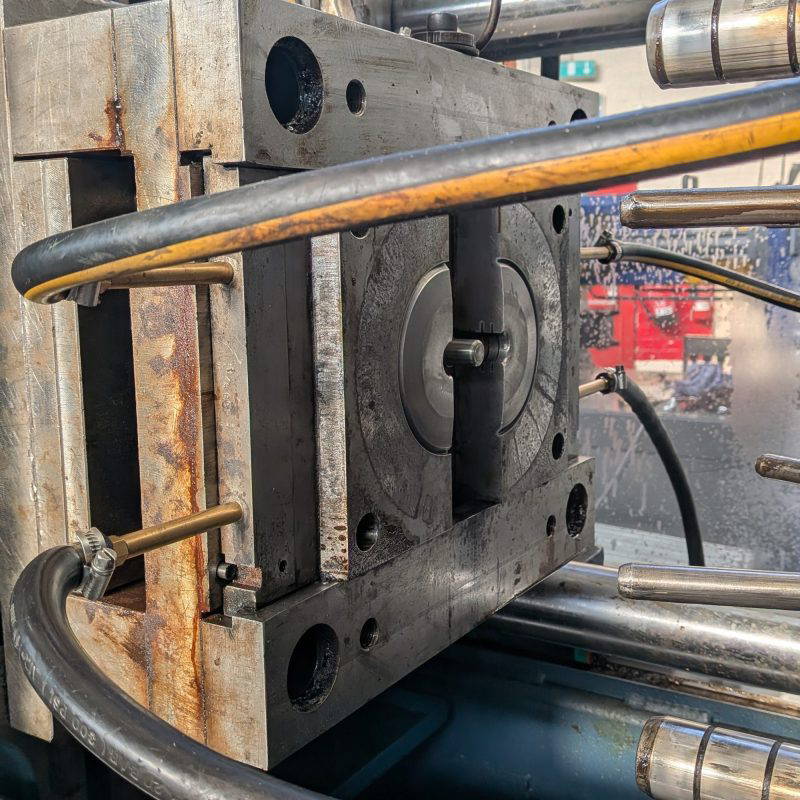
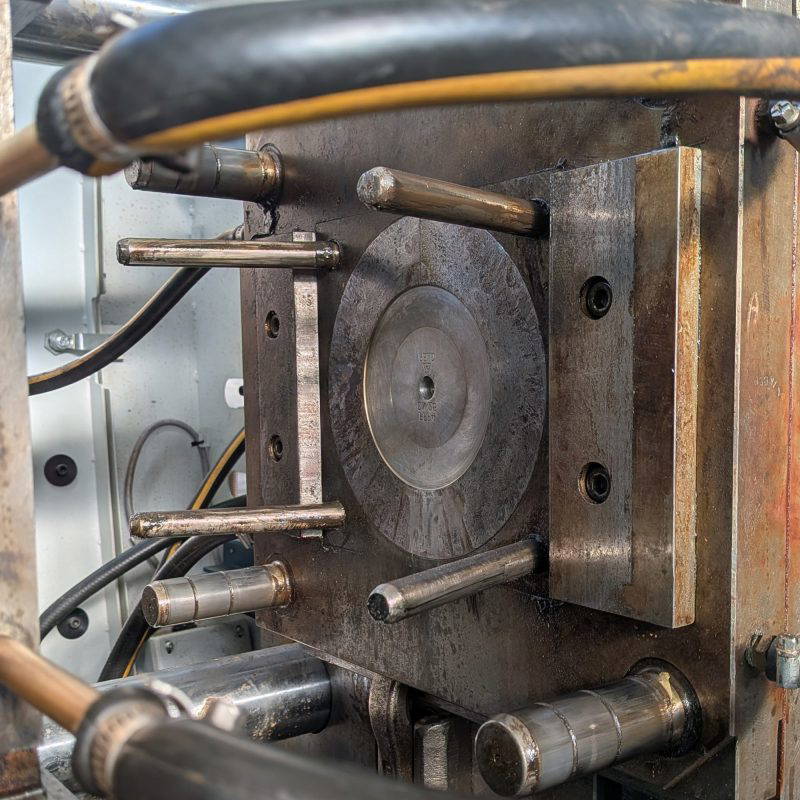
The two halfs of a metal mould in an injection moulding machine
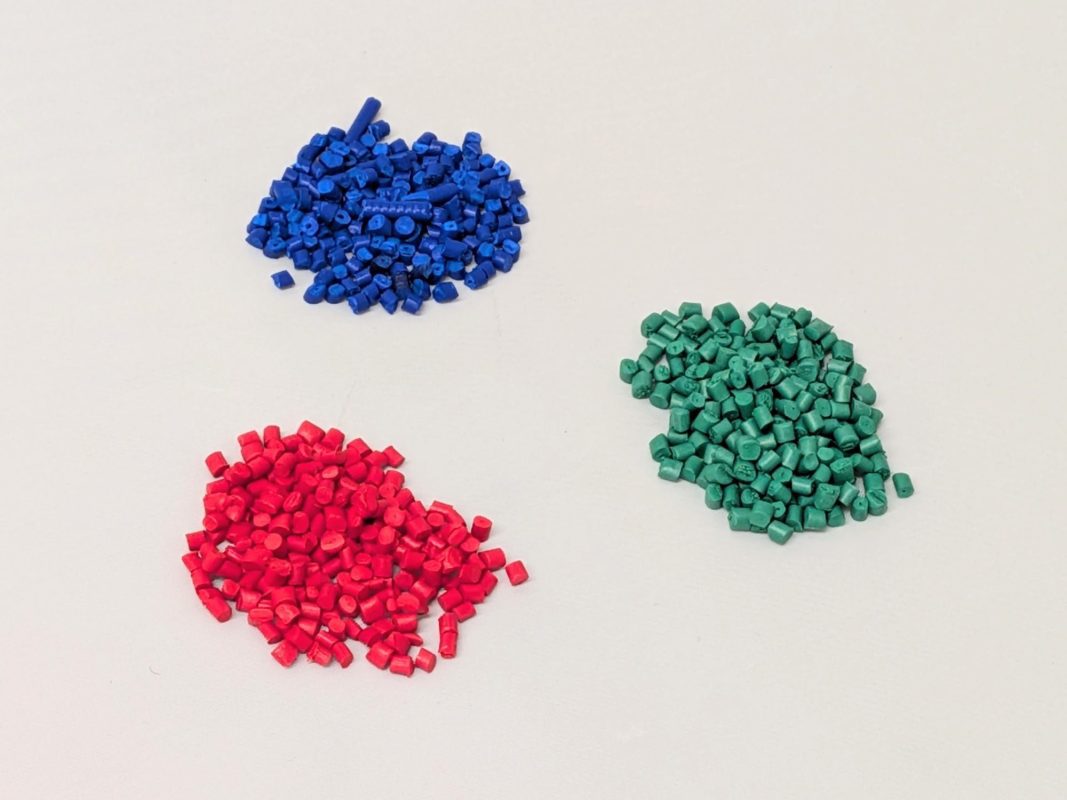
Pigment Granules
Stage 4 – Moulding
Now that everything is ready, our material is poured into the machine through a hopper. The plastic material is moved through the machine by a screw while it is heated up and melted into moulten plastic. The screw then injects the moulten plastic forward, pushing it into the metal mould, where it cools down into the final shape.
Finally, the parts are ejected from the mould and sorted out, ready to be sold. The excess pieces of plastic are grinded down, so they can be recycled to make more plastic parts!